How to write hand-drawn animation prompts
A useful animation prompt tells a small story in time. A list of attractive objects describes a picture; an action with a beginning and an ending gives an animation something to do. For your first five-second clip, keep the scene small enough to understand at a glance.
Describe the subject before the atmosphere
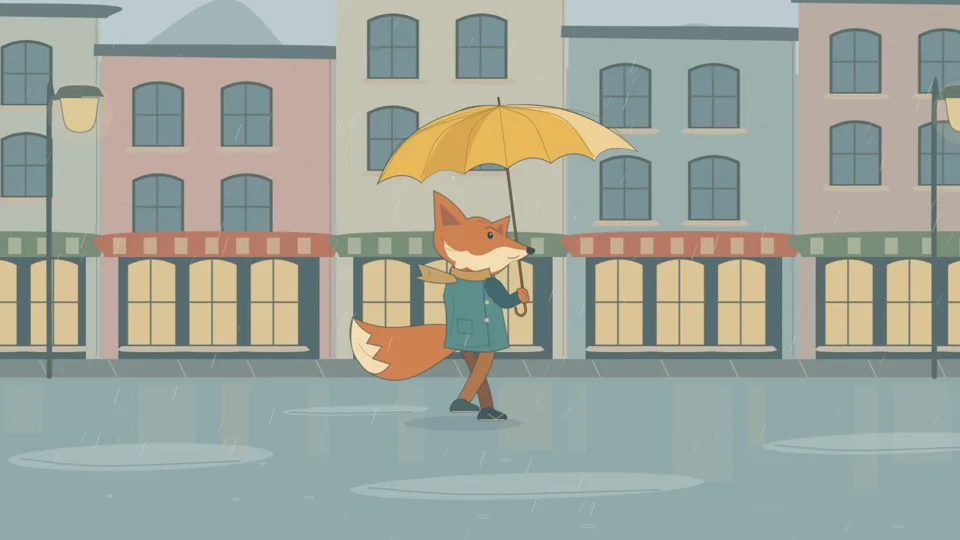
Choose one main subject and two or three recognizable details: a small orange fox, a yellow raincoat and a round blue umbrella. Then place it somewhere simple, such as a cobblestone path. A crowded town, several characters and competing background events make it harder to tell which movement matters.
Give the action a beginning and an ending
For a five-second scene, try anticipation, action and a short settling moment. The fox notices a puddle, steps over it and pauses as a ripple spreads. Describe what changes on screen instead of asking for 'beautiful cinematic animation'. These are creative instructions, not a promise that the model will time every movement exactly.
Choose color and camera constraints
Name a small palette and keep the framing steady while testing motion. Warm paper, rust orange, mustard yellow and muted blue create a clearer direction than a long list of style adjectives. A fixed wide view leaves room for the fox and its umbrella without requiring a camera move.
Watch once, then revise one thing
First check whether the main action reads without explanation. If it is unclear, simplify the action before adding detail. If the subject is cropped, ask for more empty space around it. If the scene feels static, describe a visible secondary motion such as the umbrella tilting after the step. Change one instruction at a time so you can judge its effect.
This prompt is a starting point, not a guaranteed result. Pick the five-second duration in the studio; the duration setting controls the clip length. For a longer story, develop separate scenes and assemble the exported clips in your editor.